Venue Marketing / Lead Generation
7 Proven Strategies to Get More Venue Bookings This Season
A venue outside Nashville went from 4 bookings per month to 11 in a single quarter. They didn't renovate. They didn't drop their prices. They didn't hire a sales team.
They fixed three things: response time, follow-up consistency, and where their leads were coming from.
We see this pattern constantly. The venues struggling to fill calendars usually don't have a venue problem. They have a process problem - they're leaking opportunities somewhere between "couple finds you" and "couple signs a contract."
Here are seven things that are working right now for venues booking at capacity.
1. Respond to Every Lead Within 5 Minutes
This isn't aspirational advice. It's the single highest-ROI change any venue can make.
Lead Response Management research found that contacting a lead within 5 minutes is 21 times more effective than waiting 30 minutes. In the wedding industry, where couples are emotionally charged and comparison shopping, that window closes even faster.
The fix doesn't require hiring someone to sit by the phone 24/7. A human-led follow-up system sends a warm acknowledgment within minutes of a form submission. The couple feels attended to, and your team follows up with the relationship already started.
If you implement only one thing from this list, make it this one.
2. Stop Relying on Shared Leads from Directories
Wedding directories - The Knot, WeddingWire, Zola - still generate leads. But those leads go to 4-6 venues simultaneously. You're not just competing on merit. You're competing on who responds first, and the couple is overwhelmed with options before they've had a single conversation.
Switch your primary strategy to exclusive lead generation. Run your own Facebook and Instagram campaigns targeting engaged couples in your market. Every lead goes only to you. No competition. No race to the bottom.
Keep your directory listings if you want, but cap them at 20% of your marketing budget. The other 80% should go toward channels where you own the lead.
3. Build a Follow-Up Sequence That Doesn't Quit
Most venues send one response - maybe two - and then wait for the couple to get back to them.
Couples are busy. They're planning a wedding while working full-time jobs. They might love your venue and still forget to reply to your email.
Build a follow-up sequence that spans at least 14 days:
- Minute 1: Personalized acknowledgment with tour availability
- Day 2: A photo carousel of a recent wedding at your venue
- Day 4: Answer to the most common question ("What's included in the rental?")
- Day 7: Testimonial from a past couple
- Day 10: "We'd love to show you the space - here are this week's available tour slots"
- Day 14: Final check-in with a soft close This sequence runs automatically through your communication system. Your team only steps in when the couple responds.
Venues that follow up 5-7 times book way more tours than those that try once or twice and give up. Persistence isn't pushy when it's spaced right and actually helpful.
4. Make Tour Booking Frictionless
Every step between "I'm interested" and "I'm walking through the door" is a potential drop-off point. Reduce friction everywhere:
- Offer online tour scheduling. Let couples pick a time that works for them without emailing back and forth.
- Confirm immediately. Automated confirmation text + email the moment they book.
- Send reminders. 24 hours before and 2 hours before the tour. Include the address, parking instructions, and what to expect.
- Offer virtual tours as a backup. If a couple can't make it in person, a 15-minute video call keeps them in your pipeline instead of dropping out entirely. No-shows are a real problem for venues. Automated reminders alone can reduce them by 30-40%.
5. Use Social Proof Strategically
Couples trust other couples more than they trust your sales pitch. Make testimonials and social proof visible everywhere:
On your website: Feature 3-5 testimonials on your homepage, with photos of the actual wedding. Names and dates make them feel real.
In your follow-up emails: Include a one-line quote from a past couple. "We looked at 12 venues - this one felt like home the second we walked in." That line does more selling than three paragraphs about your amenities.
On social media: Post real wedding content weekly. Not staged photos - real moments. The first look. The dance floor. The sparkler exit. According to WeddingWire's Newlywed Report, 89% of couples use social media during wedding planning, and venue photos are among the most-saved content.
During tours: If possible, show the venue set up for an event. An empty ballroom tells one story. A ballroom with tables, lighting, and flowers tells another.
6. Track Every Number That Matters
You can't fix what you can't see. Set up tracking for:
Metric | Target | Why It Matters
Cost per lead | $15-60 | Are your ads efficient?
Lead-to-tour rate | 20-35% | Is your follow-up working?
Tour-to-booking rate | 25-40% | Is your tour experience compelling?
Response time | Under 5 min | Are you reaching leads fast enough?
Cost per booking | Under $500 | Is your overall system profitable?
A CRM system makes this tracking automatic. Without one, you're running your business on gut feeling - and gut feeling doesn't scale.
Review these numbers monthly. If your lead-to-tour rate drops, your follow-up needs work. If tours are strong but bookings are low, your sales process or pricing needs attention. The numbers tell you exactly where to focus.
7. Market Year-Round, Not Just When You Need Bookings
This is the classic feast-or-famine trap. Calendar looks empty, you panic and run ads. Calendar fills up, you stop. Six months later you're panicking again.
Wedding bookings happen 6-18 months in advance. The lead you generate in March 2026 might become a booking for October 2027. If you pause your marketing during "busy season," you're creating a gap in your future pipeline.
Set a consistent monthly marketing budget - even if it's modest. $1,500-$3,000/month in ad spend, running year-round, builds a predictable pipeline. Seasonal adjustments are fine (spend more before engagement season in November-February), but never go to zero.
Venues that book consistently aren't lucky. They just don't stop.
Putting It All Together
These seven strategies aren't independent - they reinforce each other:
- Better lead sources give you warmer prospects
- Faster response times give you first-mover advantage
- Follow-up sequences keep interested couples engaged
- Frictionless booking converts interest into tours
- Social proof builds trust before the tour
- Tracking tells you what's working
- Year-round marketing keeps the pipeline full You don't need to implement all seven this week. Start with the one that addresses your biggest gap. For most venues, that's response time. Fix that first, and the rest gets easier.
See how VenueFlow AI connects all seven into a single system.
Frequently Asked Questions
Written by
Zaid Mohamed
Founder, VenueFlow AI
Zaid Mohamed is the founder and CEO of VenueFlow AI. He started in venue marketing at 19 and has spent the last several years building lead generation, lead handling, and booking systems for wedding and event venues across Canada and the United States. After watching independent venues lose bookings to slower competitors week after week, he built VenueFlow AI to give them the same response-time edge as national chains. He writes about venue marketing strategy, lead response economics, and how AI changes the booking pipeline.
LinkedInTurn this into booked tours
Want help applying this to your venue pipeline?
VenueFlow AI combines wedding venue lead generation, instant human-led follow-up, and CRM tracking so your team can respond faster and book more tours from the same demand.
Related Articles
Venue Marketing / Lead Generation / Lead Systems
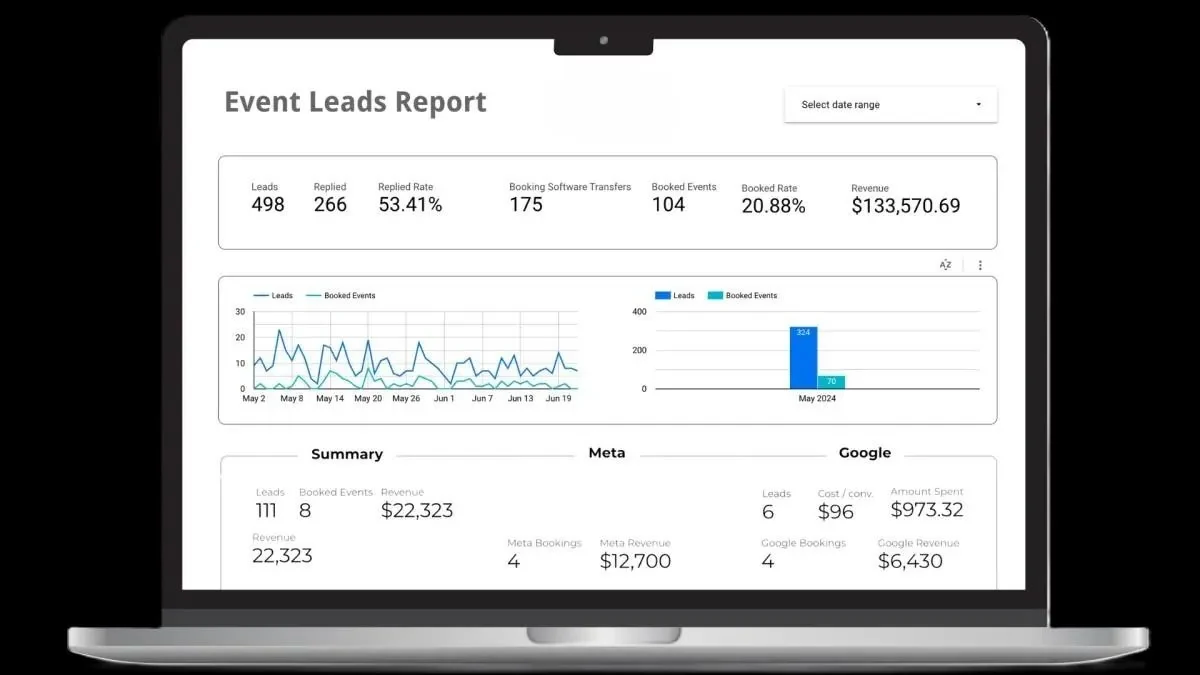
Venue Growth Guide: 8 Strategies to Double Your Event Bookings
The core VenueFlow AI growth playbook for wedding and event venues: target market, Meta ads, conversion-focused websites, Google Ads, content, directories, social media, and AI automation.
Venue Marketing / Lead Generation
Venue Marketing Strategies That Actually Drive Tour Bookings
Most venue marketing advice is generic fluff. Here are the strategies that actually move couples from inquiry to tour to signed contract.
Venue Marketing / Industry Insights
How to Define Your Wedding Venue's Target Market
Choose the wedding and event clients your venue can serve well by checking capacity, dates, inquiry history, local competition, and booking outcomes.